

“The human body is not a ‘thing.’”
“At its core, it is ‘information.’”
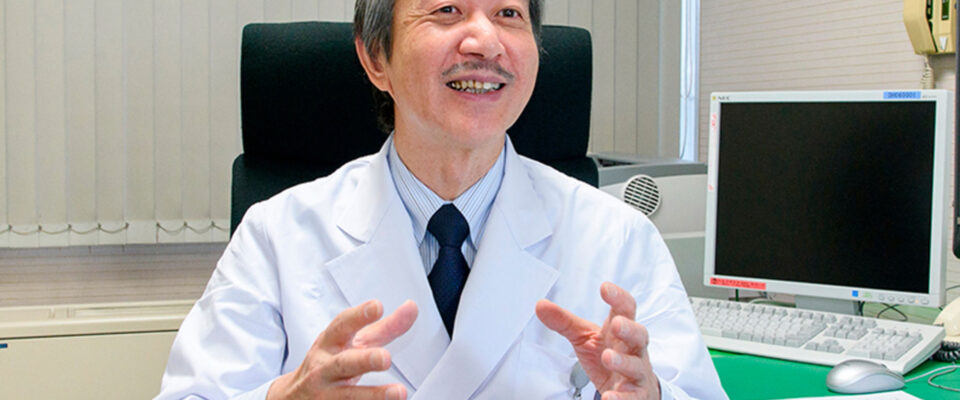
Speaking calmly is Professor Yasufumi Murakami, Professor Emeritus at Tokyo University of Science.
He is a researcher who has spent many years at the forefront of molecular biology, genetic engineering, and RNA research, and is known as one of Japan’s leading figures in RNA research.
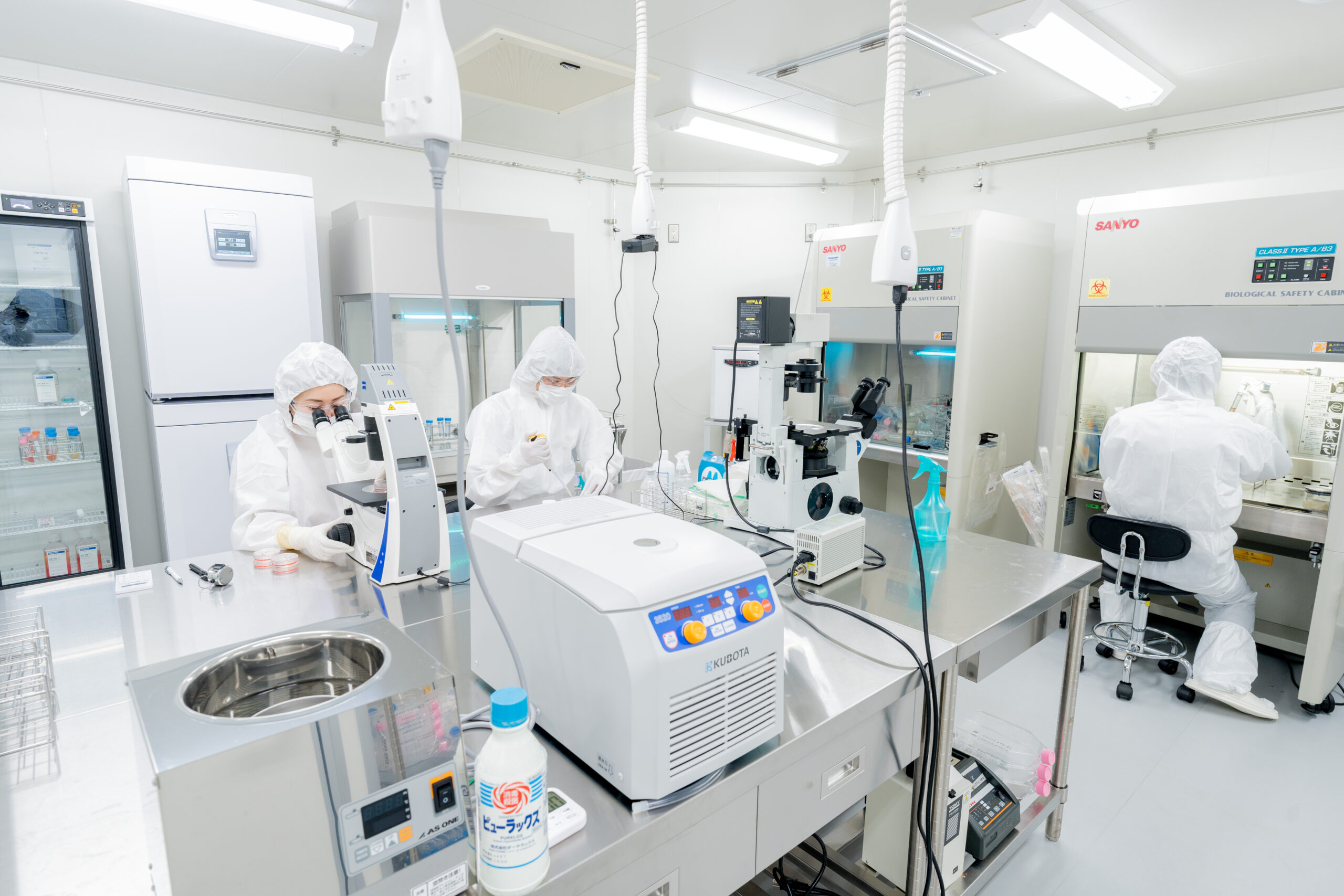
He is currently also active as an advisor to the 5Star Medical Club Cell Processing Center, continually exploring the possibilities of “future medicine” through microRNA and exosome research.
But what Professor Murakami speaks about is not merely a story about cutting-edge medicine.
It leads to one of humanity’s long-standing fundamental questions: “What is life?”

Yasufumi Murakami Profile
Specializing in pharmaceutical science, molecular biology, and immunomedicine, he has long led research that spans from basic science to clinical applications. After working at Albert Einstein College of Medicine, Memorial Sloan Kettering Cancer Center, and RIKEN in the United States, he became Professor of the Department of Biological Science and Technology, Faculty of Advanced Engineering, Tokyo University of Science in 1999.
Beginning with tumor virology research at Memorial Sloan Kettering Cancer Center, he has consistently promoted research and development in therapeutic target molecule discovery, antibody production technology, and antibody therapeutics. He has world-class achievements in the fields of diagnostic and therapeutic antibodies, including approximately 700 kinds of research reagent antibodies.
[Specialties] Regenerative medicine, pharmaceutical science, molecular biology, immunomedicine
[Career]
Graduated from the Faculty of Pharmaceutical Sciences, University of Tokyo; completed the Doctoral Program at the Graduate School of Pharmaceutical Sciences, University of Tokyo (PhD in Pharmaceutical Sciences)
Contents
- Why the “blueprint of life” alone could not explain it
- The dawn of RNA research
- “Life is driven by information”
- Cells are “talking” to each other
- Aging is a “disruption of the information network”
- Medicine enters the age of “prediction”
- Not “rejuvenation,” but “optimization”
- Research that reconsiders “what life is”
Why the “Blueprint of Life” Alone Could Not Explain It
When Professor Murakami began his career as a researcher, the prevailing view in the life sciences was that “DNA determines everything about life.”
If you analyze genes, the mysteries of life can be solved.
The Human Genome Project was advancing worldwide, and deciphering the “blueprint of life” had become the biggest theme in science at the time.
However, Professor Murakami says he had an early sense of unease about this idea.
“DNA alone could not explain living phenomena.”
The human body contains about 37 trillion cells.
Moreover, brain cells, heart muscle cells, liver cells, and skin cells—all have the same DNA, yet they perform completely different functions.
“If they share the same blueprint, why are they so different?
I thought there must be some kind of control system.”
That led him to focus on “RNA.”
The Dawn of RNA Research
Today, the terms “mRNA” and “microRNA” are familiar even to the general public.
But when Professor Murakami first began researching RNA, it was still an extremely specialized field that only a small number of researchers were paying attention to.
“Back then, RNA was thought of only as a kind of intermediary used to make proteins from DNA.”
As research progressed, however, it became clear that RNA had not just a transport role, but also a “regulatory function.”
What was especially shocking was the discovery of microRNA.
MicroRNA is an extremely small RNA molecule made up of only about 20-odd bases.
It does not make proteins.
However, it was found to control gene ON/OFF switching and alter the state of cells themselves.
“In other words, if DNA is the blueprint, microRNA is what determines how that blueprint is used.”
This discovery fundamentally changed the way life science was understood.
“Life Is Driven by Information”
Professor Murakami says that through his microRNA research, his view of life itself changed.
“Life is not matter.”
Cells, genes, and proteins are all important, of course.
But the essence lies in “how information flows.”
“Humans live as ‘information systems.’”
That is Professor Murakami’s consistent perspective.
For example, even among the same cells,
- cells that function youthfully and vigorously
- cells that cause inflammation
- cells that become cancerous
- cells that lose their ability to repair
have different “information states.”
In other words, disease may be not merely physical damage, but an “abnormality of information.”
Cells Are “Talking”
What further accelerated this line of thinking was “exosome research.”
Exosomes are tiny capsule-like particles secreted by cells.
They were once considered merely “cellular waste.”
However, it is now understood that they contain important information such as microRNA and proteins.
“Cells are communicating by using exosomes.”
When one cell releases microRNA, another cell receives it and changes its behavior according to that information.
In other words, the human body functions as an enormous “information network.”
“Life phenomena cannot be explained by individual cells alone.
Intercellular communication is the essence.”
Today, exosome research is rapidly advancing around the world, and applications are expected in many fields such as regenerative medicine, neurological disease, cancer research, and aging research.

Aging Is a “Disruption of the Information Network”
Professor Murakami also views the phenomenon of “aging” through the lens of information.
“Aging is not simply the passage of time.”
Some people remain youthful even as they age, while others experience a rapid decline in function.
What creates that difference, he says, is the “information state” of the cells.
When communication between cells becomes disordered,
chronic inflammation occurs,
repair capacity declines,
and abnormal signals increase.
Professor Murakami believes that this may be close to the essence of aging.
“In other words, aging is a deterioration of the information network.”
That is why microRNA analysis is so meaningful.
By analyzing microRNA in blood or saliva, it may be possible to detect changes occurring inside the body before symptoms appear.
Today, research is also advancing in relation to
- cancer risk analysis
- neurodegenerative diseases
- chronic inflammation
- diabetes
- immune abnormalities
.
“Future medicine will move in the direction of not ‘treating disease,’ but ‘controlling it before it develops.’”
Medicine Enters the Age of “Prediction”
The keyword for future medicine as described by Professor Murakami is “prediction.”
Current medicine is centered on “post-onset care.”
Abnormalities are detected after they appear, then drugs are used and treatment is provided.
However, if microRNA analysis advances, it may become possible to detect the “signs” of disease before it develops.
“People do not suddenly become ill.
There are always changes in information before that.”
In other words,
- signals leading toward cancerization
- signs of neurodegeneration
- accelerated aging
- immune imbalance
may appear as “fluctuations in information.”
“That is why future medicine will be about ‘prediction’ rather than ‘diagnosis.’”
This is not merely an advancement in medical technology.
It has the potential to change the very concept of “disease.”
Not “Rejuvenation,” but “Optimization”
On the other hand, Professor Murakami is cautious about exaggerated anti-aging claims.
“This is not about immortality.”
What matters is the idea of “optimizing life functions.”
By restoring intercellular communication,
reducing inflammation,
decreasing abnormal information,
and maintaining the body’s natural repair capacity.
He says this leads to “healthy longevity” in the truest sense.
“Life is always dynamic.
It is not a fixed state.”
That is why “how to control it” becomes important.
“Medicine from here on will be an era not of ‘what to put in,’ but of ‘how to organize information.’”
Research That Reconsiders “What Life Is”
At the end of the interview, Professor Murakami said this:
“In the end, life is an ‘information phenomenon.’”
Cells.
DNA.
RNA.
Exosomes.
They are not merely components.
They continuously send information to one another and keep changing, thereby making the phenomenon of “being alive” possible.
MicroRNA research is not just cutting-edge medicine.
It is also research that reconsiders “what life is.”
And now, that research is moving beyond “medicine that cures disease,”
toward questions such as how we age,
how we live,
and how far humans can understand life itself—
heading toward the future of humanity itself.
Original source: WEB magazine AGELESS
https://ageless-medical.com/regenerative-medicine/1965/