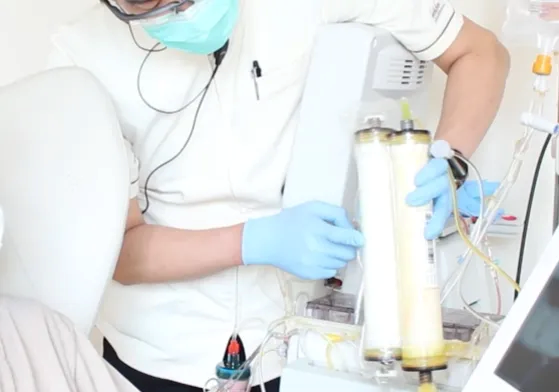
Our blood purification therapy (double filtration plasmapheresis) involves automatically separating blood into blood cells and plasma components outside the body, filtering the plasma components, and then mixing them back with the blood cells before returning them to the body. This advanced blood purification therapy removes harmful factors such as advanced glycation end products (AGEs), proteins that induce inflammation, and LDL cholesterol, which are aging factors in the blood. By removing these harmful factors, it alleviates chronic systemic inflammation that is the root cause of aging.
Duration
2.5 to 3.5 hours
Frequency
Once every 3 to 4 months
Treatment Flow
STEP1. Medical Interview
A medical interview will be conducted.
STEP2. Pre-Treatment Blood Draw
A blood sample will be taken to prepare for the blood purification procedure.
STEP3. Start of Blood Purication
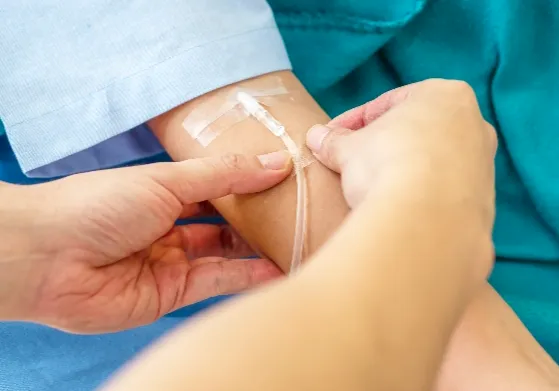
A needle that is about two sizes thicker than a regular IV needle will be used. Blood will be drawn from one arm (blood withdrawal) and returned to the body from the other arm (blood return). The total volume of blood circulated during the purification will be approximately 4,000–5,000 ml, with the plasma to be purified being 1,500 ml for men and 1,200–1,300 ml for women. These values may vary depending on age and body weight.
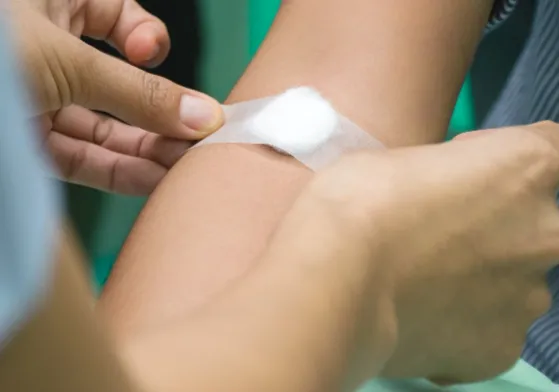
STEP4. Post-Treatment Blood Draw, Needle Removal, and Hemostasis
After the blood purification, a blood sample will be taken to evaluate the treatment before and after the procedure.
Prevention of Vascular Aging
Even among health-conscious individuals who undergo detailed check-ups and regular examinations and take medication, there are many whose LDL (bad) cholesterol levels do not decrease, who remain in a metabolic state, or who show signs of vascular aging. Rather than waiting to receive intensive treatment only after a blockage occurs—such as a stroke or myocardial infarction—this treatment is performed as a proactive preventive measure at the pre-onset stage. It is a therapeutic method that has been utilized for many years to treat a wide variety of diseases.
01
Candidates for Preventive Blood Purification
Those who wish to reduce future disease risks
Have been told they are at risk of cerebral infarction or myocardial infarction.
Those who feel concern not reflected in test results
Blood tests and blood pressure are within normal ranges, but there are signs of arteriosclerosis.
Medication is not yet necessary, but proactive measures are desired for the future.
Those who wish to prevent recurrence
Already receiving standard treatment but have previously experienced cerebral infarction or myocardial infarction.
Expected Benefits After Treatment
Improvement of LDL Cholesterol and Triglyceride Levels
Excess lipids in the bloodstream are managed, helping restore values to a healthier range.
Direct Removal of Substances Causing Arteriosclerosis
Substances that damage vascular walls, such as lipids and inflammatory cells, are directly removed.
Improved Blood Flow and Subjective Symptoms
Enhanced circulation helps alleviate concerns such as shoulder stiffness, cold hands and feet, and dull skin tone.
Improvement of Vascular Endothelial Function
The flexibility of blood vessels is restored, supporting a more youthful vascular age.
Treatment Method
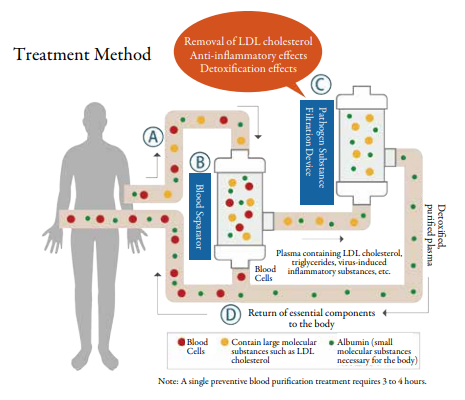
“DFPP (Double Filtration Plasmapheresis)” uses a membrane-based plasma separator to separate plasma from the blood. The plasma is then passed through a secondary filtration membrane to remove pathogenic substances present in the plasma. Substances that cannot pass through the secondar y filtration membrane are removed, while substances that can pass through are returned to the body.
Step A: Preparation (Initiation of Blood Collection)
A needle is inserted into the patient’s arm to prepare for circulating blood outside the body.
Step B: Separation (Plasma Extraction)
The collected blood flows through tubing into a plasma separator. Here, the blood is separated into blood cells and plasma, and only the plasma is sent to the filtration system.
Step C: Purification (Removal of Pathogenic Substances)
Using a pathogenic substance filtration device, the following unwanted components are precisely removed.
Lipids: Low-density lipoprotein (LDL) cholesterol and triglycerides
Viscosity-related factors: Fibrinogen (a major cause of increased blood viscosity)
Others: Pathogenic substances that promote arteriosclerosis
Step D: Return (Reinfusion of Purified Blood)
The purified plasma is recombined with the previously separated blood cells and returned to the patient’s body.
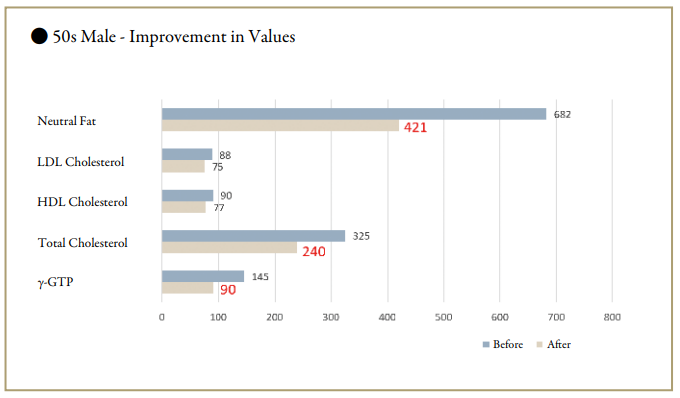
Treatment Cases at Our Clinic
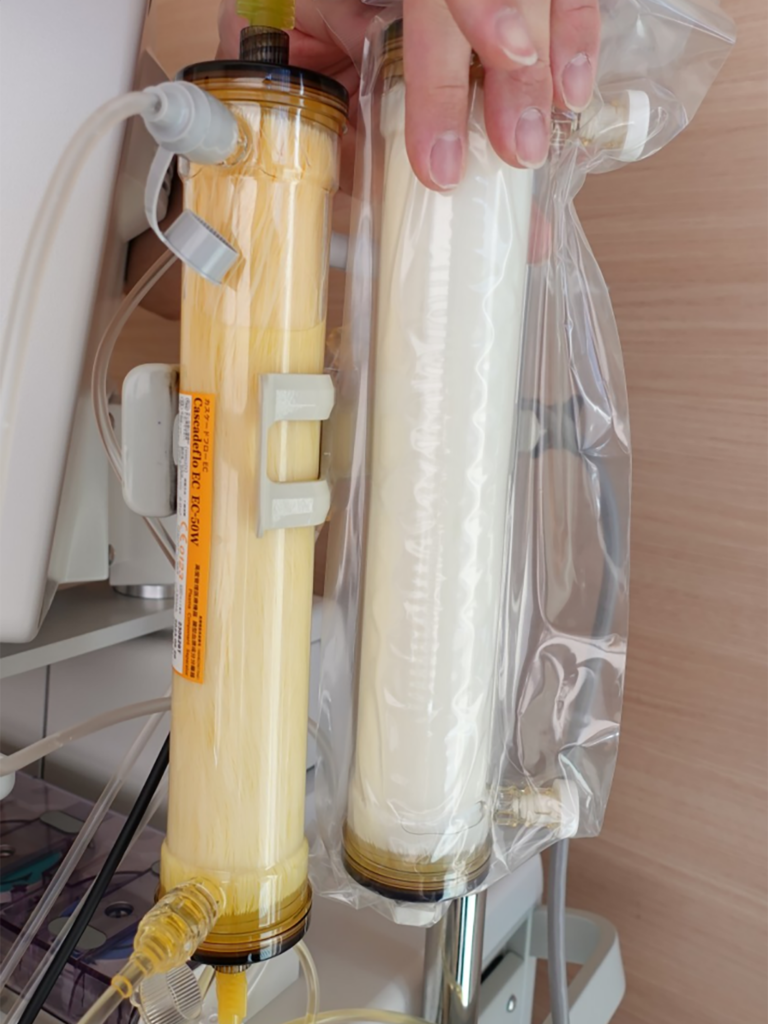
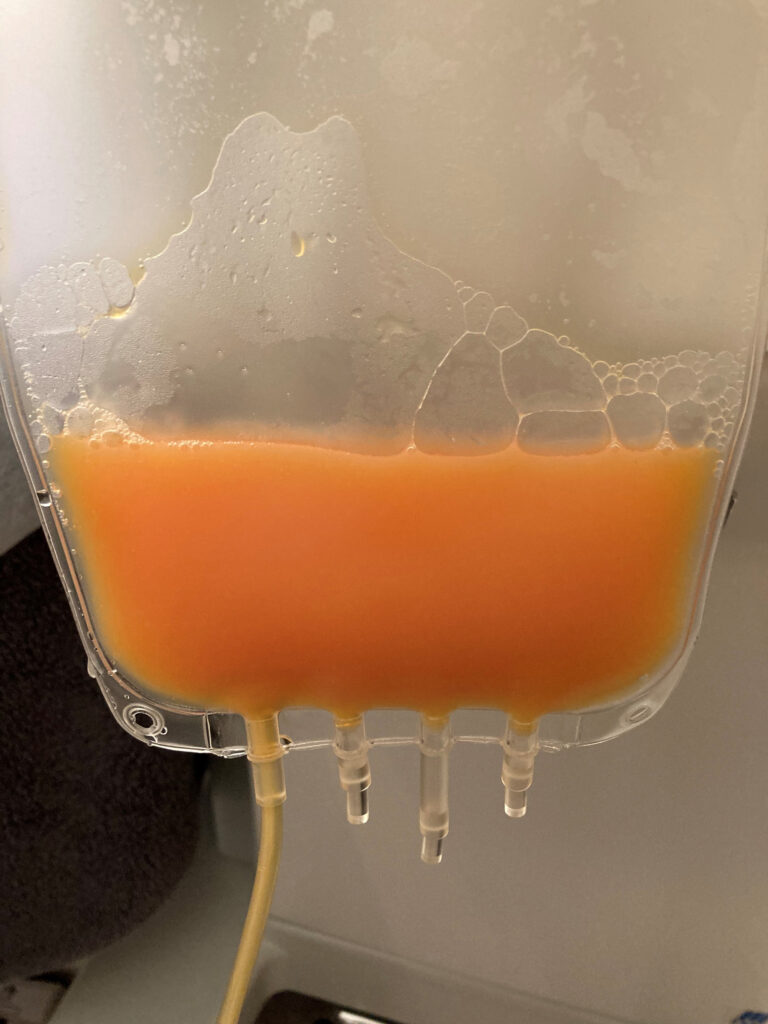
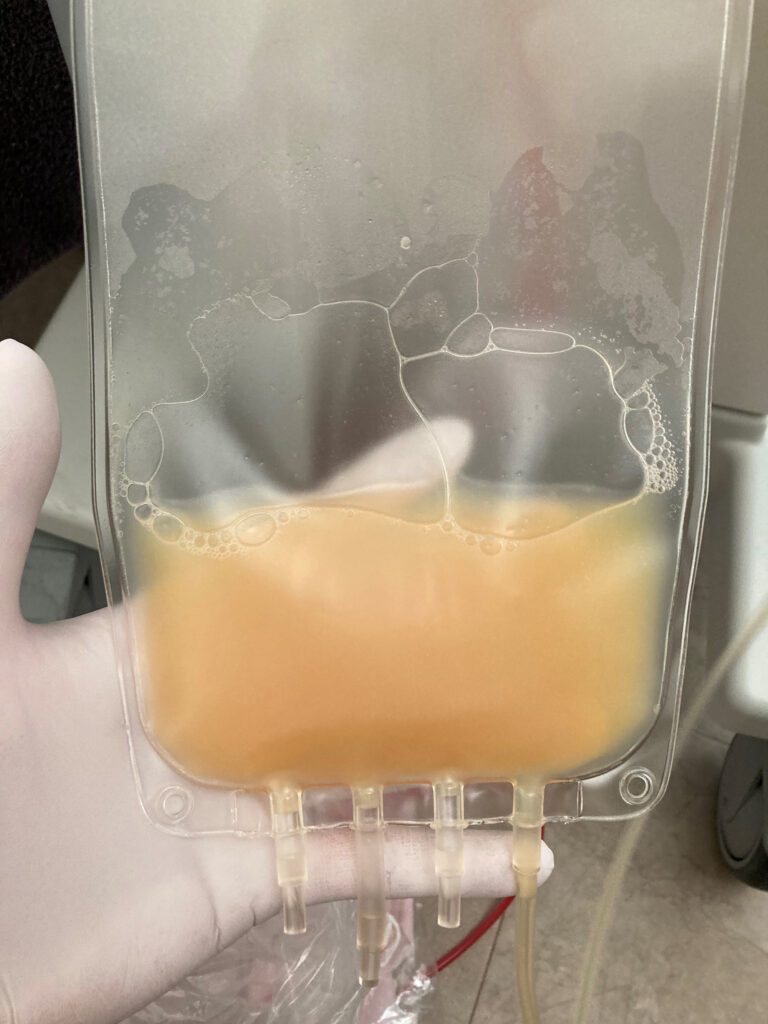
Substances Extracted from the Filter After Blood Purification
Mainly triglycerides, cholesterol, and other pathogenic substances